


The Mobile App Revolution: How Mobile App Development is Evolving

The mobile app revolution has been transforming into a defining phase. What was stated as a utility-driven application has now been transformed into an intelligent, always-connected digital ecosystem that is shaping how businesses operate and how customers interact with the brand.
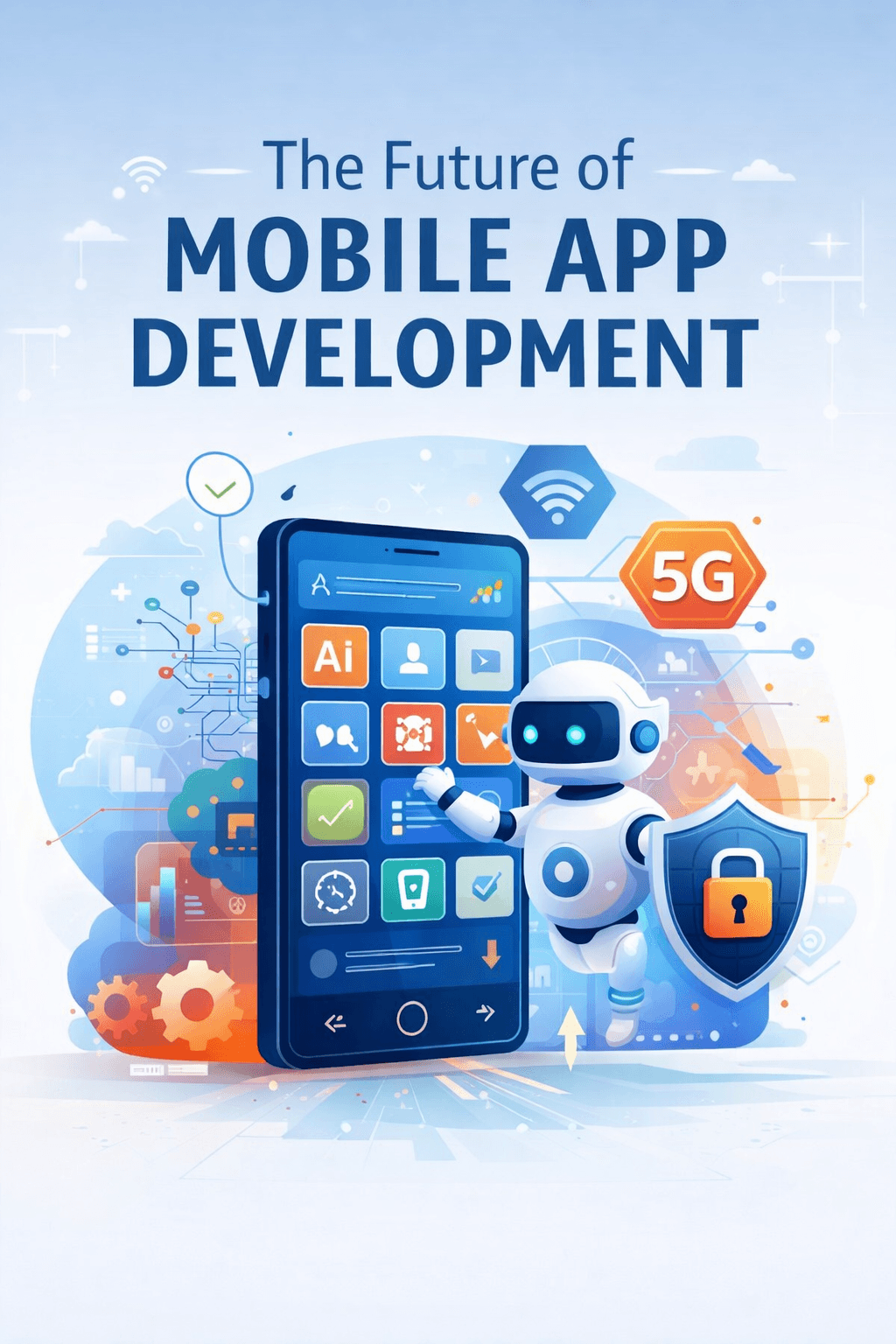
As we move to the next phase of mobile app development, mobile apps are no longer an optional extension of a business; they are becoming the strategic growth engines. Powered by AI, 5G, immersive technologies, and security-first frameworks, modern mobile apps are redefining customer experiences, operational efficiency, and competitive advantage across industries.
The Future of Mobile App Revolution
The mobile app revolution trends reflect a pivoting shift; apps are becoming much smarter, more autonomous, and deeply integrated into business ecosystems. Industry projections from global mobile app market analysts indicate sustained double-digit growth, reinforcing why businesses must treat mobile apps as long-term digital assets rather than short-term tools.
Today’s mobile apps are evolving to become:
- AI-driven, learning from real-time user behavior to deliver smarter and more personalized experiences
- Context-aware, adapting dynamically to location, intent, and usage patterns
- Highly connected, integrating seamlessly with IoT devices, wearables, CRMs, and cloud platforms
- Security-first, designed to meet increasing privacy regulations and rising customer expectations
This evolution is driven by:
- Widespread AI adoption
- Ultra-fast 5G connectivity
- Growing reliance on mobile-first customer journeys
- Rising expectations for personalization, speed, and security
For businesses, this means one thing: that apps must now think, predict, and respond, just like users expect brands to do.
How AI Is Changing Mobile Apps (Must-Know for Businesses)
As explored in our in-depth guide on AI-powered mobile apps in Saudi Arabia, AI is becoming the core engine behind personalization, predictive analytics, and intelligent automation in modern mobile experiences. For businesses delaying AI adoption, mobile apps risk becoming static tools in an intelligence-driven market. What was once a supporting feature has now become the operational element of how mobile applications learn, adapt, and deliver value in real time.
-
Hyper-Personalization at Scale
AI is now enabling mobile apps to intelligently personalize content, recommendations, user journey, and notifications based on real-time behavior, preferences, and intent, all without relying on static rules or manual segmentation.
Business impact: Brands that achieve higher engagement, stronger retention, and increased customer lifetime value by delivering an experience that feels relevant, timely, and deeply personal at every interaction.
-
Predictive Analytics & Smart Decisioning
AI-powered analytics are now enabling mobile apps to anticipate user requirements, predict churn or drop-off, and recommend next-best action before issues arise. And instead of reacting to user behavior after the fact, apps can now make intelligent decisions in real-time.
Business impact: Proactive decision-making is replacing reactive customer support and marketing, helping businesses reduce churn, improve conversions, and optimize engagement across the user lifecycle.
-
Intelligent Chatbots & Virtual Assistants
AI-driven conversational interfaces have transformed beyond basic FAQs. Modern chatbots and virtual assistants are now handling support requests, guiding onboarding, assisting with purchases, and resolving common issues without human intervention.
Business impact: Businesses benefit from lower operational costs, faster response time, and always-on customer support, all without compromising user experience
-
Context-Aware & Emotionally Adaptive Experiences
By analyzing signals like usage patterns, time of day, device context, and engagement history, AI will allow mobile apps to dynamically adjust UI flows, messaging tone, and in-app prompts at the right moment.
Business impact: Apps will feel more intuitive, responsive, and human, which strengthens emotional connection, increasing loyalty, and improving long-term retention.
Key Mobile App Technology Trends Shaping The Future
The mobile app revolution is not exactly defined by isolated technologies, but by how multiple innovations combine to create smarter, faster, and more adaptive digital experiences. For businesses, to understand these trends is no longer an option; it has become essential to remain competitive in an intelligence-driven, mobile-first economy.
-
AI & Machine Learning as the Intelligence Layer
AI and machine learning are now integrated at the core of modern mobile apps, rather than being added as an optional feature. These technologies are making apps to analyze user behavior in real-time, detect patterns, and continuously improve interactions.
From fraud prevention and behavioral insights to predictive recommendations and automation, AI can now allow mobile applications to make decisions independently.
For businesses, this pivoting shift means apps are no longer just a static tool, but a transforming system that learn from every interaction, creating long-term value with personalization and efficiency.
-
5G Connectivity Unlocking Real-Time Experiences
The rollout of 5G is transforming what mobile apps can provide. With significantly lower latency and higher data speed, apps can now support real-time streaming, cloud processing, and instant data synchronization.
This has now opened the door for advanced use cases like immersive training simulations, live collaboration tools, remote healthcare, and interactive entertainment.
As connectivity is improving, businesses can now develop rich mobile experiences that were previously limited by network constraints, which makes performance and responsiveness the key competitive differentiators.
-
AR and VR Driving Immersive Digital Engagement
AR/VR is rapidly expanding beyond gaming into practical business applications. Mobile apps are now using immersive visuals to enable users to explore products, visualize spaces, and interact with digital environments before making a decision.
In sectors like retail, real estate, education, and healthcare, these technologies can reduce uncertainty by increasing confidence during the buying or learning process.
For brands, AR and VR represent a powerful way to shorten the decision cycle and increase conversion by turning abstract information into tangible experiences.
-
The Rise of Super Apps and Unified Ecosystems
Super apps are now transforming user expectations by bringing multiple services like payments, communication, commerce, and on-demand solutions, which can be brought into a single mobile platform.
From a business perspective, this model increases retention, encourages cross-service engagement, and creates opportunities to collect richer behavioral data, making super apps a strategic growth play rather than a design trend.
-
Faster Innovation Through Cross-Platform and Low-Code Development
Mobile app development is becoming faster and more accessible with cross-platform frameworks and low-code or no-code tools. These approaches can allow businesses to launch apps across multiple devices using shared codebases while reducing development time and costs.
As speed-to-market is becoming critical, organizations that adopt flexible development strategies can iterate faster, respond to user feedback more quickly, and also scale without heavy engineering overhead.
-
Security and Privacy as Built-In Expectations
As mobile apps are handling increasingly sensitive data, security should not be an afterthought. Modern applications are designed with privacy and protection, which is built into the architecture, using biometric authentication, encrypted data flows, and compliance-ready frameworks.
For businesses, trust has become a competitive advantage. Apps that clearly prioritize data security and regulatory compliance are more likely to retain users and meet evolving legal requirements across global markets.
-
Mobile Apps as Control Hubs for IoT and Wearables
Mobile applications are increasingly acting as centralized control points for connected devices, from smart wearables to industrial IoT systems. This integration will allow continuous data collection, real-time monitoring, and automated responses across ecosystems.
For businesses, this will create new opportunities for operational insights, predictive maintenance, and personalized user experience driven by live data streams.
-
Voice, Gesture, and Multimodal Interfaces: Redefining Interaction
User interaction with mobile apps is expanding beyond touch. Voice commands, conversational interfaces, and gesture-based controls are becoming more common, improving accessibility and enabling hands-free user cases.
As these interfaces mature, apps are becoming more inclusive and intuitive, providing a broader audience while reducing friction in everyday interactions.
-
Sustainability Shaping Smarter App Design
Sustainability is becoming the core consideration for mobile app development. Efficient coding practices, optimized data usage, and energy-conscious design help reduce environmental impact, which can improve performance.
For businesses, sustainable app development can support ESG goals and enhance brand perception, while also providing faster, more efficient user experiences.
-
Blockchain Enhancing Trust and Transparency
Blockchain technology is incrensingly becoming explored within mobile applications to support secure transactions, transparent data sharing, and decentralized identity management. These capabilities are especially important in industries where trust, verification, and data integrity are critical.
As blockchain matures, mobile apps can provide higher levels of security and accountability without compromising user experiences.
Impact of Mobile App Trends on Businesses
The mobile app revolution is transforming how apps are designed, built, and scaled.
-
UX Is Now Predictive, Not Reactive
Apps anticipate the requirements instead of waiting for user input.
-
Development Strategy Is AI-First
While AI tools are accelerating development, strategic execution still matters, something we’ve explored in detail in our perspective on AI vs agencies in the age of AI app builders.
Businesses must plan for:
AI integrations from day one
Data pipelines
Scalable cloud architectures
-
Speed-to-Market Is Critical
Cross-platform tools and modular development can reduce launch timelines.
-
Security & Compliance Are Mandatory
Security is not just a layer that can be added later; it should be embedded at the core.
-
Competitive Advantage Is Experience-Led
The best apps not just work, they adapt, learn, and transform with the market expectations.
What This Means for the Future
- For Users: Mobile apps are transforming into proactive digital assistants, anticipating the requirements and delivering easy, highly personalized experiences.
- For Developers: AI-assisted development accelerates the build cycles, shifting focus from feature delivery to intelligent, scalable systems.
- For Businesses: Apps are becoming long-term digital assets, where success is driven by adaptability, security, and data-led decision-making.
The future belongs to the businesses that treat mobile apps as living exosystems, not just static products.
Why Element8 Saudi Arabia Is Built for What’s Next
At Element8, we don’t just build mobile apps; we engineer future-ready digital products designed for scale, performance, and intelligence through our end-to-end mobile app development services. Our approach is combining AI-first architecture, enterprise-grade security, and conversion-focused UX to make sure your mobile app delivers measurable business impact, not just functionality.
If you are launching a new digital product, modernizing an existing application, or exploring AI-powered mobile apps to stay ahead of the curve, our team partners with you at every single stage, from strategy and UX to development, optimization, and scale. Every app we build is designed for performance, compliance, and long-term growth in the Saudi and GCC markets.
Ready to build a mobile app designed for the future? Talk to Element8 today and turn innovation into a competitive advantage